How to Price Junk Removal: A Step-by-Step Pricing Guide
Learn how to price junk removal by the truckload: cover dump fees, labor and truck costs, set a minimum, and add fees for heavy or special items.
The Yardova team · October 28, 2026 · 16 min read
If you are trying to figure out how to price junk removal jobs, start with this: the price you quote has to cover the dump, the truck, the crew and your own time before a single dollar counts as profit. Most new haulers get that backward. They look at what a competitor charges, knock a little off, and find out at the end of the month that the business is busy but not making money.
This guide walks through the full process, step by step. You will work out your real cost per load, build a junk removal price list by truck fraction, set a minimum charge, add fees for items that cost extra to dump, and quote quickly from photos without getting burned when the pile is bigger than it looked. All the numbers here are simple examples. Plug in your own.
Why pricing is the hardest part of junk removal
Junk removal looks simple from the outside. Show up, load the truck, drive to the dump, get paid. The trouble is that no two jobs are the same. One garage is mostly cardboard and light furniture. The garage next door has a pile of old tile, three paint cans and a chest freezer.
That variety is why so many owners struggle with how to price junk removal. A flat hourly rate punishes you when the job is heavy and goes fast, and it scares customers when the job is light and slow. A guess-by-eye price works fine until the day you guess wrong on a load of plaster.
The fix is a system. When you price every job the same way, three things happen:
- Your crew can quote on site without calling you.
- Customers get consistent answers, which builds trust.
- You can look back at a month of jobs and see exactly where money was made or lost.
Step 1: Work out what a load really costs you
The first step in how to price junk removal is finding your break-even number. This is what it costs you to fill, haul and dump one full truck. Most owners guess low because they forget the costs that don't show up on a single job.
Disposal fees
Call every dump, transfer station and recycling yard within a reasonable drive and ask how they charge. Some charge by the ton, some by the cubic yard, some by the load, and many have a minimum fee. Ask about separate charges for mattresses, tires, appliances, electronics and yard waste.
Write all of it down. Those fees drive your add-on pricing later, and they change more often than most owners notice.
Labor
Add up what you pay each helper per hour. If they are employees, add payroll taxes and workers' comp on top of the wage. A two-person crew paid $20 an hour each in wages costs you more than $40 an hour once taxes and insurance are added. Ask your accountant what to add in your state.
Truck and equipment
Take a normal month and add up:
- Truck payment or lease
- Commercial auto insurance
- Fuel
- Maintenance, tires and repairs
- Trailer, dollies, straps, tarps and tools
Divide the total by the hours the truck actually works in that month, not the hours it sits in the driveway. That gives you a truck cost per working hour.
Overhead
Overhead is everything that keeps the business running even when the truck is parked: your phone, software, advertising, general liability insurance, licenses, a storage yard and your accountant. Spread these across the number of jobs you do in a typical month.
Your own pay
Pay yourself a real wage in the math, even if you don't take it out yet. If your prices only work because you work for free, the business can't hire anyone to replace you, and it can't survive a slow month.
Putting it together: a junk removal cost per load example
Here is a simple example with made-up numbers. Say a full truck takes about two hours from arrival to dump, including the drive.
- Labor for two people, including taxes: about $100.
- Truck cost for two hours: about $50.
- Disposal for a full load of mixed household junk: about $90.
- Overhead share per job: about $30.
Total: roughly $270 to fill, haul and dump one full load. That is your break-even. Everything you charge on top of it is profit, and everything below it is money you are paying out of pocket to do the job.
How to price junk removal by the truckload
Once you know your cost per load, the most common way to handle how to price junk removal is by volume, measured in fractions of your truck. Customers understand "about a quarter of the truck" far better than an hourly rate, and volume pricing rewards your crew for working fast instead of slow.
Build your volume tiers
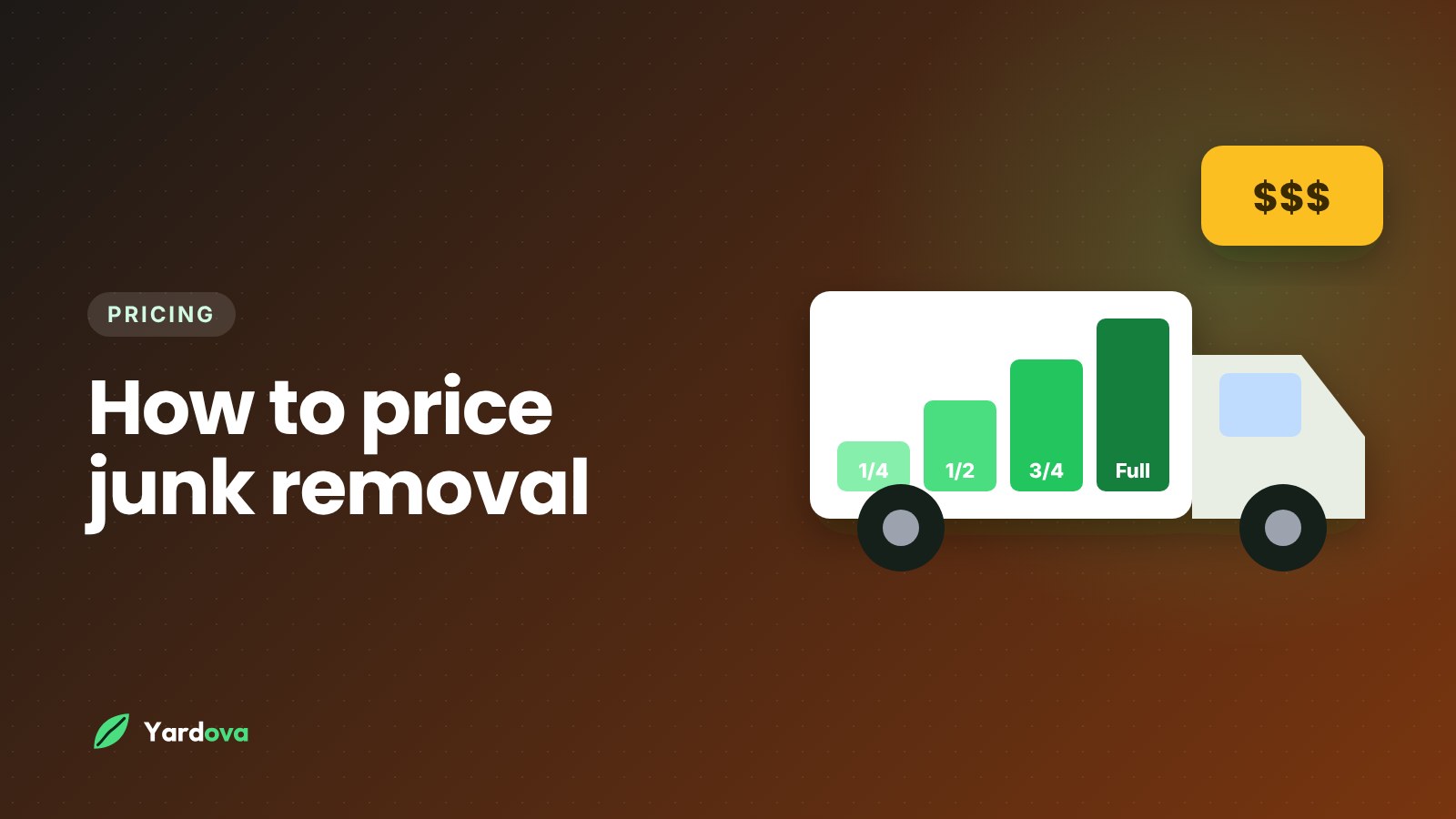
Most junk removal price lists use something like these steps:
- Minimum charge (a single item or small pile)
- 1/8 truck
- 1/4 truck
- 1/2 truck
- 3/4 truck
- Full truck
Some companies add 1/6 or 1/3 steps, but more tiers mean more back-and-forth on site. Keep it simple enough that your crew can eyeball it and explain it in one sentence.
Set your full-truck price first
Start at the top. Take your full-load cost and add your margin. Using the example above, a $270 cost might lead to a full-truck price somewhere in the $550 to $650 range, depending on your market and how much demand you have.
Leave real room above break-even. Overhead, slow weeks, broken equipment and bad weather all have to be paid for out of the margin on good jobs.
Work down to the smaller fractions
Here is where many haulers lose money. A quarter load is not a quarter of the full price. The drive, the setup, the walkthrough and the trip to the dump cost about the same whether you haul a lot or a little.
So the price per yard should go down as the load gets bigger, not stay flat. Junk removal pricing examples, using the same made-up costs, might look like this:
- Minimum charge: $125 to $150
- 1/8 truck: $175 to $200
- 1/4 truck: $250 to $290
- 1/2 truck: $375 to $425
- 3/4 truck: $475 to $540
- Full truck: $575 to $650
These are illustrations, not recommendations. Your numbers depend on your dump fees, your truck size and your local market. The shape is what matters: every step up costs more, but the bigger jobs feel like a better deal to the customer.
Know your truck's real size
Measure the inside of your box or trailer and work out the cubic yards. Then decide what "a quarter truck" means in practice, and show your crew. Some companies paint or tape lines on the inside walls of the box so everyone, including the customer, can see where the load lands. Visual markers end most pricing arguments before they start.
Setting a junk removal minimum charge that protects you
The minimum charge is the most important number on your price list. It is what you charge for the smallest job you will take, like one recliner or a few bags of trash.
A good minimum covers:
- The drive to and from the job
- At least a short block of labor for your crew
- A dump trip, or a share of one if you can stack small jobs
- A little profit
If your minimum is too low, small jobs across town will cost you money. If you'd rather not do single-item jobs at all, set a minimum that makes them worth your time and let the customers who want it cheaper go elsewhere.
Single-item pricing
Some companies list common single items at flat prices: a couch, a mattress, a hot tub, a piano. This works well on a website because customers can see the price before they call.
Make sure each single-item price is at or above your minimum. Heavy or awkward items like hot tubs, pianos and gun safes should be priced for the extra people, equipment and time they take.
Charging for heavy, bulky and special items
Volume pricing works for typical household junk. Learning how to price junk removal for the rest is where experience pays off, because volume pricing breaks down when the material is heavy or when the dump charges extra for specific items. Your price list needs to handle both, or you will eat the difference.
Heavy material
Concrete, brick, dirt, rock, roofing shingles, tile and plaster weigh far more per yard than furniture. If your dump charges by the ton, a quarter load of shingles can cost more to dump than a full load of couches. You also risk overloading your truck.
Common ways to handle heavy debris:
- Price it by weight, with a per-ton rate on top of a base charge.
- Price it at a higher volume tier than the space it takes up, such as "half a truck of shingles is priced as a full truck."
- Cap how much heavy material you'll put in one load, and say so on the quote.
Items with extra disposal fees
Many facilities charge extra for certain items, and some items need special handling before they can be dumped. Check your local rules, but the usual list includes:
- Mattresses and box springs
- Tires, with or without rims
- Refrigerators, freezers, window AC units and dehumidifiers, which contain refrigerant
- TVs, monitors and other electronics
- Paint, solvents, propane tanks and other materials many facilities won't accept in regular loads
Add a clear per-item fee for each one that costs you extra. If you can't legally or safely take something, list it as not accepted and point customers to where they can take it.
Donations and recycling
Some items can go to donation centers or scrap yards instead of the dump. That can lower your disposal cost and give customers a reason to pick you. Whether you pass the savings along or keep them is your call. Just be honest in your marketing about what you actually donate or recycle.
Labor, access and time-based add-ons
Two jobs with the same volume can take very different amounts of work. A pile at the curb takes minutes. The same pile in a third-floor walk-up with a narrow staircase takes much longer and wears out your crew.
Add-ons to consider:
- Stairs. A per-flight charge for anything above or below the ground floor.
- Long carries. An extra charge when the truck can't park within a set distance of the junk.
- Disassembly. Taking apart a swing set, shed, hot tub or bunk bed.
- Light demolition. Removing a deck, fence or carpet is really a different service. Price it as one, usually by labor hours plus disposal.
- Same-day or after-hours service. A premium for jobs that make you rearrange your day.
Keep the list short and clear. If your crew has to remember fifteen surcharges, they won't charge any of them.
How to price junk removal for common job types
The truckload method covers most work, but some jobs need extra thought. Here is how to price junk removal for the jobs that show up most often.
Single items and curbside pickups
These are quick, often booked online, and very price-sensitive. Use your flat single-item prices or your minimum charge. Group them by area on the same day when you can, so one dump trip covers several jobs and the drive time is shared.
Garage, basement and attic cleanouts
These are the bread and butter of most junk companies. Quote by volume, but walk the space or ask for photos of every corner. Basements and attics nearly always mean stairs, and garages often hide paint cans, tires and old batteries behind the boxes.
Whole-house and estate cleanouts
Large cleanouts can take several loads and a full day or more. Quote by estimated loads plus add-ons, and consider asking for a deposit. Ask whether anything needs to be set aside, donated or kept, and get that in writing so your crew knows exactly what stays.
Construction and renovation debris
Contractors and homeowners doing remodels create heavy, mixed debris. Price by weight or at a heavier tier, and be clear about what's included. Repeat contractor work can be worth a small volume discount, but only if your margins can handle it.
Yard waste and storm cleanup
Brush, branches and leaves are bulky but usually light, and some areas have cheaper green-waste disposal. Price by volume and check whether your local facility wants yard waste kept separate from regular trash.
How to quote junk removal jobs fast
Pricing is only half the battle. The other half is getting a number to the customer before they call someone else.
Quote from photos
Ask every new lead to send three or four photos of the pile from different angles, plus close-ups of anything heavy or unusual. From photos, give a range instead of a single number. A message like this works well:
Thanks for the photos! From what we can see, this looks like about a quarter to a half truck, so $250 to $425 including loading, hauling, disposal and a sweep-up. The mattress is an extra $40. We'll confirm the exact price on site before we start, and you only pay for the space you actually use. Does Thursday morning work for you?
A range protects you when the pile is bigger than the photos show, and it lets the customer budget. Confirm the final price in person before you load anything.
Respond while the lead is hot
Junk removal customers are often in a hurry. They're moving, closing on a house or clearing out a rental between tenants. Many contact a few companies and go with the first one that gives a clear answer. If you can't answer your phone on a job, set up an automatic text back so they hear from you right away. Our guide on how missed calls cost service businesses jobs covers this in more detail.
Write the quote the same way every time
A clear quote spells out the volume, any add-ons, what's included and what isn't. Customers compare quotes side by side, and the one that's easiest to understand often wins. For a full walkthrough of quote structure, read how to write a quote for a service business.
A step-by-step on-site pricing process
Knowing how to price junk removal on paper is one thing. Your crew also needs a routine for the driveway. Train them to follow the same steps on every job:
- Greet the customer and walk the full job with them before touching anything.
- Ask what stays, what goes, and whether anything is fragile or valuable.
- Point out heavy or special items and say what each one adds.
- Estimate the volume tier and say the price out loud.
- Get a clear yes, ideally in writing or with a quick text confirmation.
- Load the truck, then show the customer where the load landed.
- Adjust only if the volume changed, and explain why.
- Sweep up, take after photos and collect payment before leaving.
Junk removal pricing checklist
Use this checklist to test how you price junk removal before you publish a price list or send your next quote:
- I know my real cost to fill, haul and dump one full load.
- My full-truck price covers that cost plus a healthy margin.
- My smaller tiers cost more per yard than my full load.
- I have a minimum charge that covers the drive, labor and a dump trip.
- I have per-item fees for mattresses, tires, appliances and electronics where my dump charges extra.
- I have a plan for heavy debris: by weight, by tier or capped.
- I have clear add-ons for stairs, long carries and disassembly.
- My crew can see on the truck where each tier lands.
- My quotes always state what's included and what isn't.
- I review my disposal costs and prices at least a few times a year.
Junk removal pricing tips: mistakes that eat your profit
Even experienced haulers who know how to price junk removal slip into these. Each one quietly takes money out of every job.
- Pricing to match the cheapest competitor. Someone is always cheaper. Price for your costs and your service, not theirs.
- Forgetting the drive. A job forty minutes away costs more than one around the corner. Use a travel fee or a higher minimum for far-out areas.
- Not charging for heavy material. One load of shingles at a furniture price can wipe out a day's profit.
- Dropping the price on site without a reason. If you discount every time a customer hesitates, word gets around.
- Not tracking job by job. Without records of what each job earned and cost, you're guessing.
- Never raising prices. Dump fees, fuel and insurance go up. Your prices should too.
When and how to raise your prices
Part of knowing how to price junk removal is knowing when your prices are too low. Many owners know they should raise prices but don't, out of fear of losing work. Look for these signs:
- You're booked out a week or more for most of the season.
- You win nearly every quote you send.
- Your dump, fuel or insurance costs went up.
- You're working long hours and the bank balance isn't growing.
Raise prices in small steps, starting with new customers. Update your website, your price sheet and any saved price list at the same time, so every quote matches. Regular customers and property managers usually accept a modest increase if your service is reliable.
A strong reputation makes higher prices easier to accept, too. See how to get more Google reviews for a simple system you can run after every job.
Frequently asked questions
How much should I charge for a full truckload of junk?
Charge enough to cover your full cost to fill, haul and dump one load, plus a margin that pays for overhead and slow weeks. Start with your own numbers: labor, truck cost per hour, disposal and overhead. Then check local competitors to make sure you're in a sensible range for your market. There's no single right number, because truck sizes and dump fees vary widely from town to town.
Should I charge by the hour or by the load for junk removal?
Most junk removal companies charge by the load, or by fractions of a truck, because customers understand it and it rewards a fast crew. Hourly pricing can make sense for demolition, labor-only jobs or work where volume is hard to estimate. Many companies use load pricing for standard jobs and hourly or custom pricing for everything else.
What is a good minimum charge for junk removal?
A good minimum charge covers the drive, a short block of crew time, a dump trip or a share of one, and some profit. Work it out from your own costs rather than copying a competitor. If single-item jobs keep losing you money, raise the minimum until they're worth doing.
How do I price junk removal from photos?
Look at the photos, estimate which truck fraction the pile will fill, and quote a range that covers the likely low and high end. Add any per-item fees you can see, like mattresses or appliances. Tell the customer the final price will be confirmed on site before you start loading.
How do I charge for heavy items like concrete or shingles?
Charge for heavy material by weight or at a higher volume tier, because your dump fee is usually based on weight and heavy loads are hard on your truck. Many companies also cap how much heavy debris goes in one load. Put the rule on your price list so customers know before you arrive.
Do I need a deposit for junk removal jobs?
Most small junk jobs don't need a deposit, but large cleanouts and multi-day jobs often do. A deposit of around 25 percent is common for big jobs, and it cuts down on no-shows and last-minute cancellations. Collect it when the customer approves the quote.
Wrap-up: how to price junk removal so every job pays
Knowing how to price junk removal comes down to a few habits you repeat on every job:
- Know your real cost per load.
- Price by truck fraction with a minimum charge, and make smaller jobs cost more per yard.
- Add clear fees for heavy and special items.
- Quote fast from photos and confirm on site.
- Review your numbers a few times a year and raise prices when costs go up.
If you want help with the busywork, Yardova's junk removal software lets you save your price list, send quotes by text that customers approve in one tap with an optional deposit, and text back missed calls automatically so leads don't go to the next hauler. When the job's done, you send an invoice customers can pay by card from their phone. Read how to get paid faster for more on that side of the business.
You can start a free Yardova account and set up your price list in a few minutes, book a demo if you'd like a walkthrough first, or compare plans and pricing.